

Deep's Wicket-Mind: Why Plan Beats Luck on Sticky Indian Tracks

Published 2026-11-25 · By Rajat Malhotra (Syndicate & Match Preview Editor · Pune Desk)
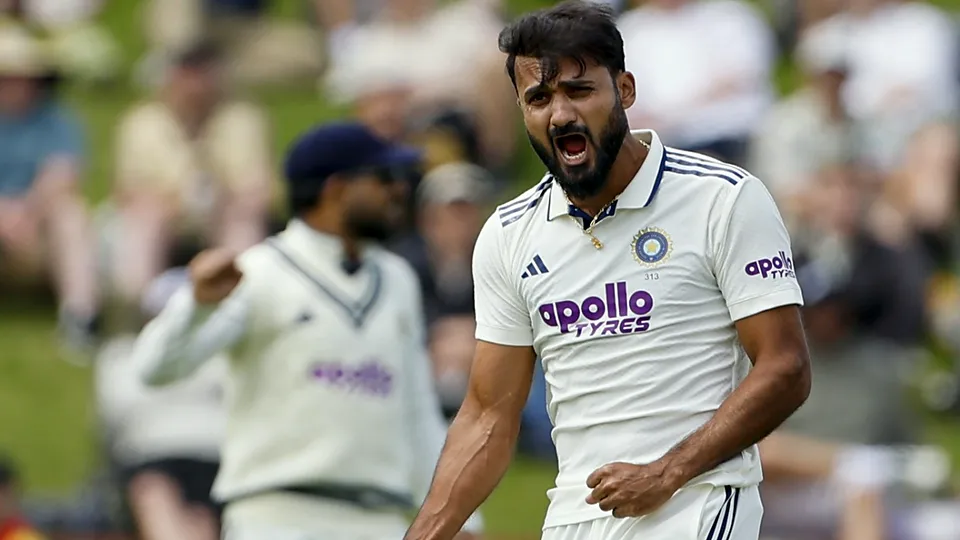
The new ball did the talking. Not the wrist, not the pace, but the simple geometry of a skiddy hard length into a sticky red-soil track. Akash Deep took three wickets for 53 in his Test comeback, and while the headlines scream 'magic ball,' the reality is far more mechanical. You can’t just chuck a good delivery and hope for a top-edge. Deep says it plainly: 'I was playing with the batter's mind.'
That quote sits awkwardly with the modern IPL narrative. Most captains in the dugout believe that a single Impact Player gamble or a dew factor after 8:30 PM IST changes everything. Deep rejects that. He talks about sticking to a plan for long periods. In the Ranji grind, that patience is rare. In T20s, it’s almost extinct.
The Wicket-Mind vs. The Boundary-Percentage
When Deep says he played with the batter's mind, he’s admitting a vulnerability that most quicks hide. He knew where the weakness was. Probably a gap off the back foot, or a tendency to drive at the short ball. He exploited it. This is the same logic we see in IPL pre-toss dilemmas. You don’t pick your XI for the toss; you pick it for the specific boundary dimensions of the ground. If the straight boundary is 65 meters, you need the skiddy length to force early contact. If it’s 70, you need the big arm.
"You can't just bowl a good delivery and expect a wicket. You need to have a plan and stick to that plan for long periods."
- Akash Deep
Contrarian take: The IPL auction market values 'fire' over 'ice.' But on the track in Pune, where the surface holds but also cracks under pressure, ice wins. Deep’s 3/53 is a reminder that wickets are manufactured, not gifted.
Why Left-Right Pairs Against Wrist-Spin Fail
Here’s where the strategy gets spicy. Indian teams love pairing a left-hander and a right-hander against wrist-spin. The theory is decent. One bats on the front, one on the back. But against a disciplined off-breaker, both often hit through the middle or down the leg side. Deep’s performance highlights the flaw. He didn’t bowl at the stumps; he bowled at the gap. The batter didn’t know where to stand. That’s the 'mind' part.
- Standard T20 Approach: Power-hit, boundary-percentage obsessed. High risk, low retention.
- Deep’s Test Approach: Controlled length, targeting weaknesses. High retention, low risk.
- IPL Impact Player Gamble: Often used to fix batting pairs. Rarely used to fix bowling plans. That’s the blind spot.
Think about it. When a team is batting in the death overs, do you sub in a bowler who bowls at the head, or one who bowls with a plan? Most captains pick the former because it feels 'aggressive.' Deep would call that amateur hour.
The Math Behind the 'Magic' Ball
Let’s look at the numbers. Three wickets in 53 runs. That’s an economy of 3.53. In Test cricket, that’s average. In T20s, it’s elite. But the context matters. Deep wasn’t taking wickets because of speed. He was taking them because the batter’s mind was tired. They kept guessing wrong. That’s a tactical kill, not a physical one.
For the Pune desk, this suggests a shift in how we scout. Stop looking for the 140 kph bouncer. Start looking for the bowler who can bowl a plan for 20 balls without deviating. That’s a rarer skill. And that’s where the real value lies in the next IPL auction. The sweet bonanza slots india of this season’s T20s are hidden in the bowlers who don’t flash but finish.
The new ball did the talking, yes. But the mind behind it did the planning. Remember that next time a captain changes his XI after a loss. It’s not luck. It’s a failure of the plan.

Updated 2026-11-25 · Instant Rupee Deposits & 60s Withdrawals · 24/7 Support.
Access Official TLCakes Portal →Executive Sports Editor · Jaipur Desk
Pranav Shetty has covered Indian cricket and digital sports from Jaipur for over a decade. At TLCakes (tlcakes.com), he leads investigative coverage on sweet bonanza slots india, live match dynamics, and tournament strategy.
Reader Discussion & Match Reactions (4)4.9★ Community (4 Comments)
Verified Indian cricket reader perspectives & tactical debate on tlcakes.com
Toss matters less here; Deep's skiddy short ball at 65m straight boundaries forces early contact, ignoring dew factor myths that plague most IPL tactics.
Bhai, Deep wicket mind beats luck. Paisa vasool bowling to back foot gaps, proper mental edge even in T20 grind where patience rare.
Deep's 53 runs conceded in 3 wickets signals consistency for fantasy XI. Pick him as opening bowler; his back-foot exploit makes him high-value differential.
@Harshvardhan_K Agree, but note Deep's 53-run economy over 3 wickets shows he holds plan. His back-foot exploit makes him a safer fantasy opener than pure pace.

