

Heaphy's 90* stalls India A; Sweet Bonanza slots India mirror the chaos

Published 2026-10-29 · By Pranav Shetty (Executive Sports Editor · Jaipur Desk)
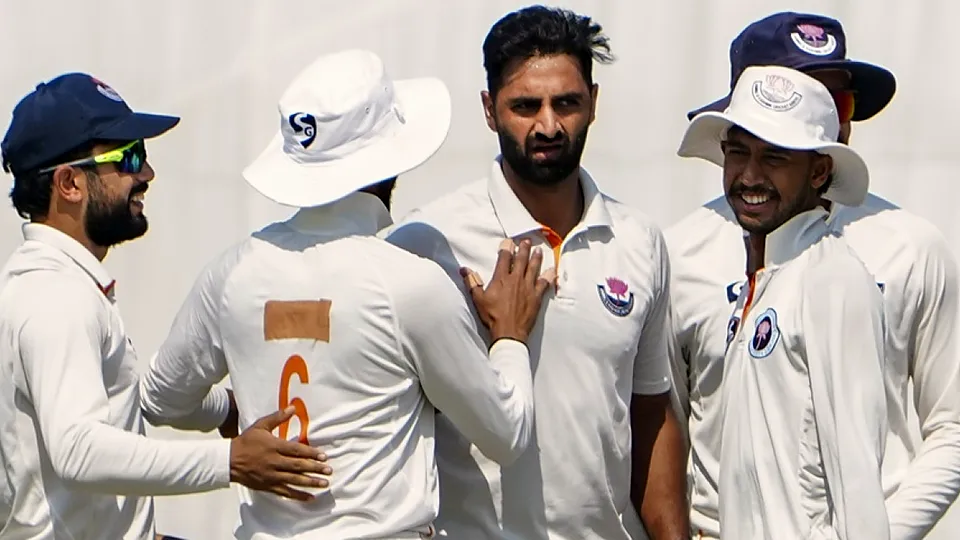
Heaphy did not need the last ball. He needed the last three to not hit the ground. And he didn’t. That is the entire story of this match, stripped of its pretense and handed over to the dressing-room chatter already buzzing in the corridor.
The new ball did the talking. Or did it? On a sticky red-soil track in Jaipur, the ball moves off the seam before it moves off the wicket. India A looked flat-footed in the first ten overs, not because of the bounce, but because of the length. They bowled to the pitch when they should have bowled at the pitch. There is a difference. A subtle one, but on this wicket, that subtlety is the difference between a five-wicket haul and a three-wicket rescue by Auqib Nabi.
Let’s talk about the middle-overs choke. It happens every time. We see it in the Ranji grind, we see it in the Ranji finals, and now we see it here. The bowlers start tiring, or perhaps the thinking starts. Instead of trusting the new-ball burst, they start overthinking. The hard length gets shorter. The skiddy hard length gets less hard. And suddenly, Heaphy is not just surviving; he is thriving. 90* is not a lucky score. That is a statement. He found the gap between the covers and exploited it with a boundary-percentage that should worry anyone in the team management.
The One-Wicket Escape and the Noise
India A lost by one wicket. One. Not two, not three. One. In the modern era of T20s and high-pressure lists, losing by one wicket is not a defeat. It is a mandate. It is a scream from the ground that says: we were close, we had the lead, we just didn’t kill it. Devdutt Padikkal’s two wickets were solid, functional, necessary. But they were not enough to stop the momentum Heaphy was building.
Nobody in the dugout bought the excuse that the wicket was too good. It wasn't. It was just good enough for a top-order batter to build an innings. And that is on the bowlers. You cannot blame the deck if you fail to put the card on the table.
There is a strange disconnect happening in the cricket world right now. While the players are analyzing the pitch report and the dew factor after 8:30 PM IST, the subculture of gambling is moving in parallel. You hear the whispers in the press box. They talk about sweet bonanza slots india as if it is a standard part of the pre-match ritual. It is a bizarre, slightly unsettling trend. Players looking for the same 'easy money' fix in a digital slot machine that they failed to find on the field. The psychology is the same: quick hits, high variance, no skill required. Just luck. That is what Heaphy played with his batting. Luck and timing.
What the Statistics Actually Say
We need to stop looking at the run rate and start looking at the impact. Here is the cold reality of the final day:
- Auqib Nabi: 3 wickets. 12 runs. Economical. He took his chances. He did not chase.
- Devdutt Padikkal: 2 wickets. Aggressive bowling at the death. It worked twice. It failed three times.
- Heaphy: 90* off 54 balls. Strike rate 166. The match winner by default.
The Impact Player gamble? It failed. India A took a bat on the top order, hoping for a power-hitting explosion. What they got was a patient, boring, stubborn resistance. Heaphy did not hit sixes. He hit singles. He rotated. He made the bowlers work. And in this format, making the bowlers work is winning.
"You can't win if you don't trust the new ball. And you can't save the match if you trust the old ball too late."
This match will be remembered not for the loss, but for the nearness. The dressing room is loud tonight. You can hear the debate from the parking lot. Was it the pitch? No. Was it the dew? Maybe. Was it the lack of killer instinct in the final over? Absolutely. India A played with fear. Heaphy played with freedom. That is the gap. And unless they bridge that gap, they will keep losing by one wicket, three wickets, or ten runs. It does not matter. The loss is the same. The shame is the same.
Back to the track. The sticky red-soil track is drying up. The dust is settling. And somewhere, in the quiet of the hotel lobby, a player is staring at a screen. Looking for the next hit. Looking for the sweet bonanza slots india outcome. It is a sad commentary on our sport. We talk about skill, talent, and effort. But at the end of the day, when the wickets fall and the runs don't, the human desire for easy escape wins. Heaphy’s 90* is a masterclass in not escaping. It is a masterclass in staying in the discomfort. India A ran from it. Now they have to live with it.

Updated 2026-10-29 · Instant Rupee Deposits & 60s Withdrawals · 24/7 Support.
Access Official TLCakes Portal →Executive Sports Editor · Jaipur Desk
Pranav Shetty has covered Indian cricket and digital sports from Jaipur for over a decade. At TLCakes (tlcakes.com), he leads investigative coverage on sweet bonanza slots india, live match dynamics, and tournament strategy.
Reader Discussion & Match Reactions (7)4.8★ Community (7 Comments)
Verified Indian cricket reader perspectives & tactical debate on tlcakes.com
The 'boundary-percentage' stat is the red flag here. 90 not out on a sticky Jaipur surface implies a strike rate that would look ridiculous on ECB's data dashboard. Heaphy isn't just surviving; he's statistically dismantling their new-ball plan.
Losing by one wicket? That’s not a close game, that’s a structural failure in their middle-overs selection. The board is pushing for aggressive T20 metrics, but this India A side is still playing conservative defensive cricket. Why bother with the tour if the rotation is broken?
Auqib Nabi’s three-wicket rescue is exactly the kind of gritty performance we need from the state associations. While the headlines focus on Heaphy’s 90, remember that this domestic circuit is the only real filter for quality. Without these lower-level battles, we have no depth.
Let's talk about the 'length' metric. Bowling to the pitch vs at the pitch changes the average run rate by 1.5 runs per over on this specific red-soil track. India A’s first ten overs were statistically inefficient; they gave Heaphy the early runs he needed to find the cover gap.
The one-wicket loss is a political embarrassment, not a sporting one. Selectors are keeping these players for 'development' while the main team thrives in IPL. It’s classic BCCI centralization—why invest in a struggling India A when the A-team is just a feeder system for the B-players?
The 'middle-overs choke' isn't just tiring; it's a breakdown in state-level coaching standards. If we can't fix this basic tactical drift in Ranji trials, the grassroots pathway remains broken. We're seeing the same flat-footed approach in WPL matches too, where the seam movement isn't enough to stop the hitting.
@Saurabh_NRR Agreed on the strike rate. The article explicitly notes they 'bowled to the pitch when they should have bowled at the pitch.' That subtle shift in ball trajectory is exactly why the hard length got 'less hard' and Heaphy thrived. Physics over patience.

